



Вот суровая правда, с которой рано или поздно сталкивается каждый создатель музыки с помощью ИИ: вы пишете идеальный текст, выбираете престижный жанр, например «инди-поп» или «современный R&B», нажимаете «генерировать» — и... мелодия получается совершенно безликой, невыразительной или на милю далекой от того, что вы на самом деле представляли.
Если вам это знакомо, значит, вы попали в «ловушку алгоритма безопасного пространства».
Большинство пользователей просто указывают Suno желаемый жанр, но не указывают характер самой мелодии. Как постоянно отмечают опытные звукорежиссёры из сообщества Reddit r/SunoAI, если относиться к Suno как к простому генератору текста, вы получите лишь математическое среднее из обучающего набора данных, состоящего из миллионов песен.
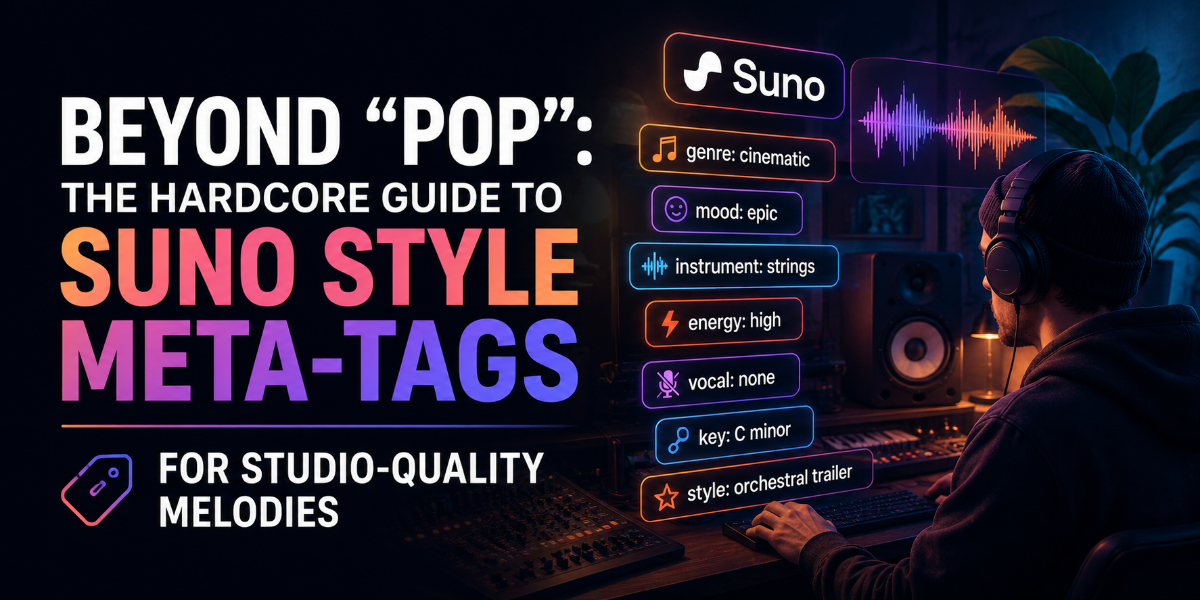
Если вы хотите выйти за рамки и создать хуки, достойные Billboard, вам нужно освоить скрытую систему мелодических метатегов Suno. Именно эти команды в скобках [] действуют как регуляторы, позволяющие напрямую управлять четырьмя отдельными музыкальными слоями: ведущими инструментами, качеством хука, техникой исполнения и вокальной фразировкой.
Добавьте эту памятку в закладки. Именно так вы перейдете от азартной игры с кредитами к управлению цифровой студией.
1. Мета-теги ведущих инструментов: кто в центре внимания?
Разные инструменты несут в себе свою эмоциональную ДНК. Выбор правильного ведущего элемента задает базовую энергетику всего вашего аранжировки.
-
[Гитарный рифф]: Святой Грааль для рок-, инди- и современных поп-композиций. Используйте его в припеве, чтобы создать энергичный, риффовый инструментальный взрыв. -
[Синтезаторная мелодия]: Мелодическая основа электронной музыки. Незаменим для таких жанров, как от синтвейва и киберпанка до фьючер-баса. -
[Piano Run]: Генерирует быстрые, чётко артикулированные фортепианные каскады. Идеально подходит для создания драматических классических акцентов или изысканных поп-аранжировок. -
[Walking Bass]: Мгновенно воспроизводит культовую, энергичную басовую линию, характерную для классического джаза и блюза. Сочетайте её с вставками духовых инструментов, чтобы создать аутентичную атмосферу ночного лаунджа. -
[Saxophone Lick]: Секретное оружие в X (Twitter) для мгновенного придания чувственности или ретро-поп-атмосферы. Необязательно использовать его на протяжении всей песни — вставьте его в бридж для максимального эффекта. -
[Соло на скрипке]: Очень чутко реагирует на темп. На низких скоростях создаёт запоминающуюся кинематографическую атмосферу; при высоких BPM — интенсивный, эпический оркестровый драйв. -
[Бас 808]: Основа низких частот, от которой дрожит грудь. Абсолютно необходим, если вы занимаетесь продюсированием в стилях Trap, Hip-Hop или Phonk. -
[Дисторшированный лид]: Тяжёлые, агрессивные, перегруженные тона. Это оптимальный модификатор для создания звукового дизайна в стилях индастриал-метал и киберпанк. -
[Acoustic Picking]: Обеспечивает чистую, текстурированную артикуляцию струн. Идеальный выбор для фолка, инди или сырой, минималистичной эстетики авторов-исполнителей.
2. Качество припева и «застревающие в голове» мелодии: определение запоминаемости
Эти теги не определяют инструмент; вместо этого они определяют математическую сложность, предсказуемость и эмоциональную траекторию мелодии.
-
[Запоминающийся хук]: Заставляет модель отдавать приоритет очень повторяющимся, легко напеваемым основным мелодиям. Используйте этот параметр для поп-музыки, готовой к радиоэфиру, или фоновых треков для социальных сетей. -
[Earworm]: Ещё более агрессивный вариант, чем стандартный хук. На Reddit авторы используют этот тег для создания тех запоминающихся, от которых невозможно избавиться мелодий, которые крутятся в голове слушателя весь день. -
[Сильная мелодия]: Максимально повышает чёткость основной мелодической линии. Если Suno продолжает генерировать нечёткую фоновую музыку вместо чёткой мелодии, добавьте этот тег. -
[Простая мелодия]: Минималистичный набор нот с прямыми интервалами. Идеально подходит для того, чтобы оставить достаточно звукового пространства для сложных текстов песен или насыщенного вокального исполнения. -
[Сложная мелодия]: генерирует сложные интервальные скачки, альтерации и структуры, вдохновленные джазом. Используйте с осторожностью: если в ваших текстах отсутствует строгая ритмическая каденция, вокал может вступать в конфликт с фонограммой. -
[Гимническая мелодия]: Грандиозные, массивные мелодии стадионного масштаба, призванные вызвать реакцию «хорового пения». Идеально подходит для кинематографических финалов или энергичных, воодушевляющих треков. -
[Лирическая мелодия]: Использует плавные, очень вокальные и связные переходы между нотами. Ставит эмоциональную передачу выше технического виртуозного исполнения — основной признак глубоких баллад. -
[Парящая мелодия]: Предполагает резкий скачок на октаву и структурное крещендо. Вставьте её сразу в начале припева, чтобы достичь эмоционального пика. -
[Завораживающая мелодия]: Запускает минорные, меланхоличные или загадочные аккордовые последовательности, которые запоминаются слушателю благодаря своей чистой красоте, а не поп-повторяемости.
3. Техники исполнения и теория музыки: уровень «Pro»
Именно здесь вы вводите профессиональные студийные аранжировки в процесс принятия решений ИИ, отходя от стандартных аккордовых циклов.
-
[Арпеджио]: Разбивает аккорды на отдельные, каскадно следующие друг за другом ноты. Очень эффективно для чистых фортепианных пьес или пульсирующих электронных синтезаторов. -
[Контрапункт]: Одновременно переплетает несколько отдельных мелодических линий. Идеально подходит для прогрессивного рока или барочных структур, хотя требует минимального количества сопроводительного текста, чтобы не превысить лимит токенов модели. -
[Синкопа]: Сдвигает ритмический акцент с стандартного сильного доля. Если ваша композиция кажется слишком жесткой или механической, добавьте эту функцию, чтобы мгновенно придать ей свинговость и грув в стиле R&B или фанка. -
[Остинато]: Генерирует постоянно повторяющийся короткий музыкальный мотив в нижнем регистре, создавая мощный гипнотический импульс. -
[Глиссандо]: Вызывает плавные, непрерывные переходы между нотами вместо ступенчатых скачков. Прекрасно подходит для струнных, арфы и выразительной игры на синтезаторе. -
[Staccato]: Чёткие, короткие, отрывистые ноты с чётким акустическим разделением. Полная противоположность плавному легато. -
[Легато]: Шёлковистые, плавные переходы, при которых ноты плавно перетекают одна в другую без перерывов. -
[Call and Response]: Создает структуру диалога между различными инструментами или между вокалом и ведущим инструментом. Идеально подходит для аутентичного блюза и соула. -
[Модуляция]: Даёт указание движку изменить тональность, обычно в сторону повышения, чтобы усилить энергию финального припева. Для достижения наилучших результатов размещайте этот мета-тег непосредственно внутри структурного блока, такого как[Припев — Смена тональности].
4. Мета-теги вокальной фразировки: управление исполнителем
Эти команды не указывают ИИ в каком жанре петь, а скорее как голосовые связки должны физически артикулировать ноты.
-
[Мелизматический вокал]: Запускает вокальные пассажи, повороты, а также сложную технику исполнения одного слога текста на нескольких меняющихся нотах. Незаменимый тег для аутентичного современного R&B, соула и госпела. -
[Силлабический вокал]: Одна нота на слог. Четко, прямо и без лишних пассажей. Необходимо для быстрых треков, поп-панка и обеспечения максимальной ясности текста. -
[Поток]: Специально оптимизирует ритмическую синкопированность и каденцию исполнения ИИ-рэпера. Предотвращает произнесение моделью жестких, монотонных или похожих на разговорную речь вокальных тактов. -
[Topline]: Указывает ИИ-движку рассматривать ведущую вокальную партию как наиболее заметный, подходящий для радиоэфира и отличительный элемент во всем аудиомиксе. -
[Ad-lib]: Запускает свободные, душевные вокальные импровизации, пассажи и фоновое напевание, которые очень эффективны для заполнения пустых промежутков во время бриджей или длинных аутро.
Профессиональный рабочий процесс: наслоение для точности
Чтобы максимально эффективно использовать эти теги, комбинируйте их между четырьмя слоями. Не перенасыщайте; вместо этого выбирайте по одному тегу из каждой категории, чтобы направлять траекторию ИИ.
-
Для меланхоличной, поздневечернего R&B-трека:
Стилевая палитра:R&B, медленный темп, [Лирическая мелодия], [запоминающаяся мелодия], [мелизматический вокал], [импровизация], интимное звучание электропианино Rhodes, глубокий бас 808 -
Для взрывного арена-рок-припева:
Стилевая палитра:Хард-рок, стадионная энергия, [гитарный рифф], [гимнная мелодия], [парящая мелодия], [дисторшированная соло-гитара], громоподобная ударная партия, 130 ударов в минуту -
Для утончённого инди-электронного грува:
Стилевая палитра:ню-диско, электронный грув, [синтезаторная соло-партия], [синкопа], [арпеджио], фанковая басовая линия, 115 ударов в минуту
Идеальное SaaS-решение: бесшовная оркестровка нескольких моделей в Meloty.ai
Хотя освоение этих ручных приёмов с использованием скобок значительно улучшит ваши результаты, борьба с текстовыми полями, балансировка весов токенов и переключение между вкладками — это серьёзное препятствие для рабочего процесса серьезных творцов. Более того, как часто сетуют продюсеры в X (Twitter), управление кроссплатформенными подписками только для того, чтобы добиться правильного сочетания текста песен, логики и рендеринга аудио, — это изнурительно.
Именно поэтому профессиональные авторы переходят на Meloty.ai.
Meloty.ai устраняет препятствия в создании музыки с помощью ИИ, предлагая универсальный, рабочий процесс студии с поддержкой нескольких моделей. Вместо того чтобы заставлять вас запоминать сложные теоретические теги, наша система изначально интегрирует самые передовые в мире крупные языковые модели — включая ChatGPT 5.5, Claude 4.8 и Gemini 3.1 Pro — непосредственно в нашу Unified Agent Studio.
Создавая трек на Meloty.ai, вы получаете доступ к автоматизированной профессиональной среде:
-
Интеллект ИИ-сопродюсера: Вам не нужно гадать, как форматировать текст. Просто скажите нашему Агенту: "«Дайте мне мрачный R&B-трек с сумасшедшими вокальными пассажами и драматичной сменой тональности в конце». Встроенные LLM автоматически формируют идеальную структуру текста и технические мета-теги за кулисами.
-
Больше не нужно переключаться между вкладками: Создавайте первоклассные тексты песен, структурируйте логику своих запросов и выбирайте предпочтительный аудиодвижок (например, Google Lyria 3 Pro или MiniMax Music 2.6) — и всё это в одном окне чата. Никаких дополнительных подписок не требуется.
-
Загрузка профессиональных аудиотреков и MIDI-файлов: Хватит довольствоваться заблокированными стереомиксами. Meloty.ai позволяет экспортировать до 12 отдельных аудиотреков и полных MIDI-файлов, благодаря чему вы можете перетаскивать массивы нот, сгенерированные ИИ, прямо в Ableton, Logic или FL Studio.
-
100% коммерческая свобода использования: Каждый сгенерированный вами трек полностью обеспечен чистыми коммерческими правами, что гарантирует безопасность вашей музыки для монетизации в Spotify, использования в видеоиграх и получения лицензий на синхронизацию на YouTube.
Не позволяйте вероятности диктовать ваше музыкальное видение. Возьмите полный контроль над аранжировкой, текстами песен и отдельными дорожками с помощью передовой студии на базе искусственного интеллекта Meloty.ai уже сегодня.